Sunday, December 9, 2012

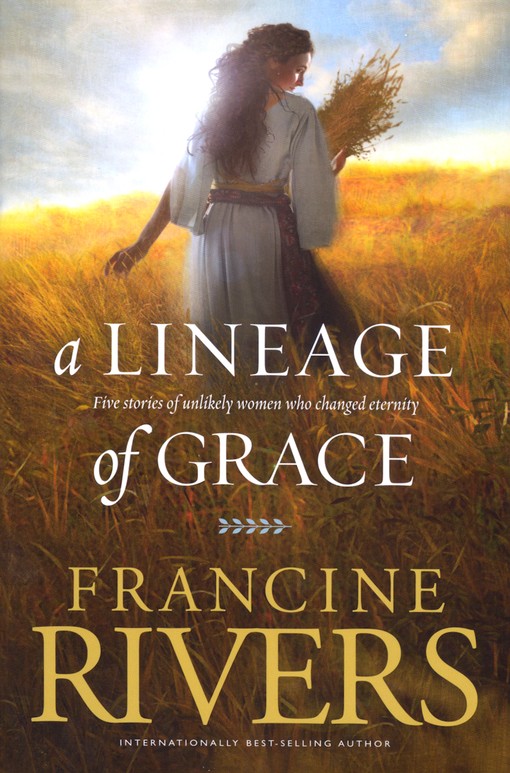
Book Review - A Lineage of Grace


As I read the book Lineage Grace by Francine Rivers there are a couple of thoughts that stood out.

You don't have to be perfect to be used by God. God can and does take your imperfections and uses them for his glory. In our world, a woman who marries her father in law, a prostitute, and an adulterer (the  other woman) are not looked upon kindly. Yet if there is a change of heart, God can use you.  All of the women mentioned at some point during their difficult lives experienced a change of heart that turned their hearts toward God.

The cultural norms of Biblical times for women are hard to reconcile with modern times. I'm sure all the women in Biblical times weren't comfortable with cultural norms that dictated they married young and bear children. When I imagine myself living back then, I think a part of me would have waged a fight.

There was a longing for the Messiah. Every generation wondered when the promise would be fulfilled. Life was full of challenges for the Jewish people and they were looking for some relief. The words of this hymn describe their ache for a Messiah:

Come Thou long expected Jesus
Born to set Thy people free
From our fears and sins release us
Let us find our rest in Thee
Israel's strength and consolation
Hope of all the earth Thou art
Dear desire of every nation
Joy of every longing heart
Born Thy people to deliver
Born a child and yet a King
Born to reign in us forever
Now Thy gracious kingdom bring
By Thine own eternal spirit
Rule in all our hearts alone
By Thine all sufficient merit
Raise us to Thy glorious throne

I enjoyed this book and getting a sense of how the women must have lived. The thoughts I shared in the previous blog posts are only the ones that stood out, but as you read the stories you will think of things you never thought of before - deep thinking is always beneficial. But ultimately, the book is about salvation, faith and hope; when your circumstances seem insurmountable - God steps in and does the impossible. The women with their scarred pasts are now noted as heroes and God gets the glory, because He is amazing. This book also encourages women in particular to dream and to recognize that you are not limited by your circumstances or cultural norms - in God's eyes we are all equal and worthy of his love and salvation. It's a worthwhile read and I hope you enjoyed getting small look of the women that are mentioned in the lineage of Christ.


Thursday, December 6, 2012

A Lineage of Grace - MARY

Mary is the last woman mentioned in the genealogy of Christ. She had Jesus through what is known as a virgin birth - she never knew a man, but the Holy Spirit impregnated her. Even as I type that, I can't wrap my mind around it, so I can only imagine what Mary must have felt. One minute she's a normal young lady, the next she's pregnant and there's a young, unique life growing in her.

By the time the angel spoke to Mary, the Jewish people had been waiting for Messiah for a long time. Life was very difficult, and the Messiah would make things better. When the angel Gabriel addressed her, he told her that she was favored and that she would blessed with a child named Jesus, the Messiah. Mary in her humanness asked, "But how can this happen, seeing I know not a man?" Gabriel replied, "the Holy Spirit will overshadow you and the baby born to you will be holy."  After all of this transpires, Mary gracefully accepts her assignment.

As it is laid out in the book, the author provides a perspective of what it must have been like to be the mother of Jesus from infancy to adulthood, watching Him as he is crucified. As a mother, I know that all toddlers aren't obedient and well behaved - they require great training and discipline; apparently Jesus the toddler did not. [Please note, this is not mentioned in the Bible].

Because Mary knew who Jesus was she listened to her son in ways that some how don't seem to make sense to us. Consider the story of when Mary and Joseph lost Jesus for three days and he was found in the temple in deep discussion with the religious leaders. A frightened Mary asks Jesus how could he have done this? He replied "...know ye not that I must be about my father's business?" It's a stinging statement that immediately removes the panic but also indicates knowledge and self assurance. His parents did not understand.
There's also the instance when Jesus turned water in to wine. He appeared to speak to his mother harshly, yet she then told the servants to do whatever He tells you to do.

Mary had the burden of knowing -she knew her Son was the promised Messiah, but she watched as so many did not believe. He was there, yet they did not know or did not accept him. That can only pain a mother's heart, but Mary pondered all these things in her heart.

Can you relate to Mary? What does it mean to be favored? If you are favored by God, do you question God? How do you know you are favored? How would you parent a child that only you knew was different? Today we hover and are overprotective - contrast that to Mary's parenting style of Jesus. Is it ever OK for a child to be indignant to a parent? How can you learn from your children? Do you ponder as you raise your children?

Tuesday, December 4, 2012

A Lineage of Grace - BATHSHEBA

Bathsheba isn't mentioned directly in the genealogy of Christ, instead she is referred to as Uriah's wife.
Who was Uriah? He was a captain in David's army.  One day while Uriah was away fighting for King David, David saw Uriah's wife taking a bath on the roof (as was the custom of the day) and lusted after her. He summoned her to his chamber, where he then slept with her.  From their interactions, Uriah's wife became pregnant. David then tried to hide what had happened by coming up with a plan. He tried to get Uriah drunk so that he would sleep with his wife, but Uriah did not want to go against the customs  of the day which said that when a man was at war, he didn't have relations with his wife. So that plan failed. So David set Uriah up so that he was killed in battle - he gave the order that Uriah be placed in the front line of battle where it was the most dangerous. David then married Bathsheba thinking that no one would know of his illicit affair; she became his eighth wife.  David's action was displeasing to the Lord, who accordingly sent Nathan the prophet to reprove the king.
Nathan told a parable of the rich man who took away the one little ewe lamb of his poor neighbor (II Samuel 12), and excited the king's anger against the unrighteous act; the prophet then applied the case directly to David's action with regard to Bathsheba.
David at once confessed his sin and expressed sincere repentance. Bathsheba's child by David was struck with a severe illness and died a few days after birth, which the king accepted as his punishment.
David loved Bathsheba, for she became the mother of Solomon. In David's old age, Bathsheba secured the succession to the throne of her son Solomon, instead of David's eldest surviving son Adonijah. (1 Kings 1:11-31).

Can you relate to Bathsheba? Was Bathsheba complicit in this situation? Did she do anything wrong? She is listed as Uriah's wife, yet it was as David's wife she had Solomon - do you find this odd? Is there any significance? As a woman, was there anything that she could have done to prevent David from lusting after her? How does God choose to honor Bathsheba?

Sunday, December 2, 2012

A Lineage of Grace - RUTH

This is the third in a series of women mentioned in the genealogy of Christ. To get caught up, check here and here.
Ruth - is one of the more romantic stories in the Bible, and in the retelling of this story, the author does not disappoint. Here's a scaled down version.

Ruth was Naomi's daughter in law and she was from Moab. Moab is where Naomi and her husband moved to for a better life, but it was not a Godly country. Naomi's husband and her two sons died, leaving her without someone to carry on the family name. At the same time Naomi heard that life was better back home, so Naomi decided to go back home to Bethlehem with her two daughters in law. She didn't anticipate that they would make the journey with her, after all, they were not from Bethlehem. Orphah chose to stay which was not a problem for Naomi, but Ruth decided to go wherever her mother in law was going, which was uncharacteristic. Somehow she had come to believe in Naomi's God, and made that famous statement found in the first chapter of Ruth:
16 But Ruth replied, “Don’t urge me to leave you or to turn back from you. Where you go I will go, and where you stay I will stay. Your people will be my people and your God my God. 17 Where you die I will die, and there I will be buried. May the Lord deal with me, be it ever so severely, if even death separates you and me.” Ruth 1:16-18
This may have been a turning point for Naomi, as up to this point she thought her life was bitter.
They travel to Bethlehem and end up working in the fields of Boaz. Boaz is a well respected guy, a bachelor, who had done well for himself by following Godly principles, and who took care of his employees. Boaz was also a relative of Naomi, and the son of Rahab.

Naomi recognizes that there is an opportunity for her line to be carried on through Boaz as he is what is known as a kinsman redeemer; she provides counsel to Ruth on what she needs to do, based on Israelite customs and guidelines from God.  Ruth is obedient and follows Naomi's instruction.

Ultimately, Boaz and Ruth are married and have a child named Obed, who was the father of Jesse (who was the father of David). Ruth was said to be better to Naomi than seven sons  - that is an amazing testimony.

They are many women in this story - Ruth, Naomi, Orphah; which one do you relate to? Naomi never seemed happy in Moab, but went because it was her husband's decision; based on the unfolding of the story, do you think God honored her decision? Even though Naomi was initially bitter, Ruth chose to follow her - what does that say about both women's character? Naomi was able to impart sound counsel to Ruth in spite of her circumstances; how was she able to do so? Can the same be said of us? Is it uncharacteristic to feel closer to your in-laws than your natural family?